


How to Design a Rain Garden: Turn a Soggy Yard Into a Beautiful, Water-Wise Landscape
Published: 21/09/2026 | Updated: 21/09/2026
Does one part of your yard turn into a soggy mess every time it rains?


Water may pour from a downspout, collect at the bottom of a slope, run across a patio, or settle into a low spot where grass never seems to thrive.
Instead of treating that area as wasted space, you may be able to transform it into one of the most interesting features in your landscape: a rain garden.
Rain gardens are designed to temporarily collect and absorb stormwater runoff while incorporating plants, grasses, shrubs, stone, and other landscape elements into an attractive garden bed.
Done well, a rain garden doesn't have to look like a drainage project.
It can look like it was always meant to be part of the landscape.
Here's how rain gardens work, where to put one, what to plant, and what to consider when designing a beautiful landscape around the way water naturally moves through your property.
What Is a Rain Garden?
A rain garden is a shallow landscaped depression designed to temporarily capture rainwater and allow it to soak into the ground.
Instead of runoff immediately traveling across hard surfaces, pooling in unwanted areas, or flowing toward a storm drain, some of that water can be directed into a planted area.
Water may come from:
- Roof downspouts
- Driveways
- Patios
- Walkways
- Slopes
- Other areas of the landscape
A properly designed rain garden holds water temporarily rather than functioning as a permanent pond.
Plants and soil then become part of a landscape system that helps manage runoff while creating an attractive garden feature.
Why Build a Rain Garden?
The most obvious reason is water.
But rain gardens can provide several landscape benefits at once.
Manage Stormwater Runoff
Rain gardens can help slow and capture some of the water moving through a property during storms.
Make Difficult Areas More Useful
A low area where conventional lawn struggles may become an opportunity for a planted landscape feature.
Add More Plants to the Landscape
Rain gardens can support combinations of flowering perennials, ornamental grasses, shrubs, and other plants appropriate for the site.
Create Wildlife Habitat
Depending on plant selection and location, rain gardens can provide food and habitat for pollinators, birds, and other beneficial wildlife.
Reduce Lawn Area
Turning a difficult patch of turf into a planted bed can reduce the amount of lawn that needs mowing and maintenance.
Add Visual Interest
A well-designed rain garden can introduce texture, movement, flowers, foliage, stone, and seasonal interest to an otherwise overlooked part of the yard.
Is a Rain Garden the Same as a Pond?
No.
A typical residential rain garden is intended to hold stormwater temporarily and then drain.
A pond is designed to maintain standing water.
That distinction is important.
If water remains in the proposed location for extended periods after every rainfall, you may have a drainage, grading, groundwater, or soil problem that requires more investigation before simply installing plants.
A rain garden should work with your site's drainage—not disguise a larger problem.
Step 1: Watch What Happens When It Rains
Before buying plants or digging anything, observe your property during rainfall.
Where does the water come from?
Where does it travel?
Where does it collect?
Look at:
- Downspouts
- Roof runoff
- Driveway edges
- Patio edges
- Slopes
- Lawn depressions
- Walkways
- Property boundaries
You may discover that the soggy area isn't actually the best location for the rain garden.
Sometimes the better solution is to intercept runoff before it reaches the problem area.
Understanding the water comes first.
Design comes second.
Step 2: Choose the Right Location
A rain garden needs to be positioned where it can receive runoff safely without creating problems for your house or surrounding property.
Avoid simply choosing the lowest point in the yard and starting to dig.
Consider the garden's relationship to:
- Your home's foundation
- Septic systems
- Underground utilities
- Property lines
- Existing drainage infrastructure
- Large tree roots
- Slopes
- Neighboring properties
Before digging, always have underground utilities located according to the requirements in your area.
Local regulations may also affect how stormwater can be redirected or managed, so check applicable municipal or county guidance when planning a drainage-related project.
Step 3: Understand Your Soil
Soil plays a major role in whether a rain garden will function properly.
Water needs somewhere to go after it enters the garden.
Sandy soil generally allows water to infiltrate relatively quickly.
Clay-heavy soil can drain much more slowly.
Many yards contain something in between—or heavily compacted soil left behind after construction.
A simple infiltration or percolation test can help you understand how quickly water moves through the proposed area.
If drainage is extremely slow, don't assume digging a deeper hole will fix it.
That can create a basin that simply holds water.
Depending on the site, soil amendments, grading changes, drainage infrastructure, or professional design may be necessary.
Step 4: Think About How Much Water You're Capturing
A downspout draining a small section of roof produces a very different amount of runoff than a large roof, driveway, or patio.
The size and depth of a rain garden should relate to factors such as:
- Drainage area
- Rainfall patterns
- Soil infiltration
- Slope
- Garden depth
- Local conditions
This is one area where generic rules can become misleading.
A rain garden that works beautifully on one property may be undersized, oversized, or poorly located on another.
For substantial runoff or complicated drainage conditions, professional landscape or stormwater guidance can be worthwhile.
Step 5: Create a Shallow Basin, Not a Hole
A rain garden generally uses a broad, shallow depression to temporarily hold water.
Think garden bed with water-management capability, not backyard pit.
The shape can be organic and flowing rather than perfectly circular or rectangular.
Curved edges often blend naturally into residential landscapes.
A gentle basin can also be integrated with surrounding planting beds so that the finished garden feels intentional rather than isolated.
Use the Three-Zone Approach to Planting
One of the easiest ways to think about rain-garden planting is to divide the garden into moisture zones.
Zone 1: The Lowest Area
This portion receives the most water and may remain wet longer after rain.
Plants selected here should tolerate periods of temporary wetness while also handling the site's normal conditions between storms.
Zone 2: The Slopes
These areas may receive moisture but typically drain sooner than the center.
This creates opportunities for plants that tolerate moderately variable moisture.
Zone 3: The Upper Edge
The outer or upper portions generally stay drier.
Plants here can help transition the rain garden into the surrounding landscape.
This zoned approach gives you much more planting flexibility than treating the entire garden as one uniformly wet environment.
What Should You Plant in a Rain Garden?
There isn't one universal rain-garden plant list.
A plant that thrives in a rain garden in the Pacific Northwest may be completely inappropriate for Arizona, Texas, Florida, New England, or the Midwest.
Your selections should account for:
- USDA hardiness zone
- Local climate
- Sun exposure
- Soil
- Typical rainfall
- Drainage
- Mature plant size
- Local ecology
- Maintenance preferences
Where appropriate, locally native plants can be excellent candidates because many are adapted to regional conditions and can provide valuable habitat.
But even a native plant needs to match the specific moisture and sunlight conditions of its location within the rain garden.
Use a Mix of Plant Types
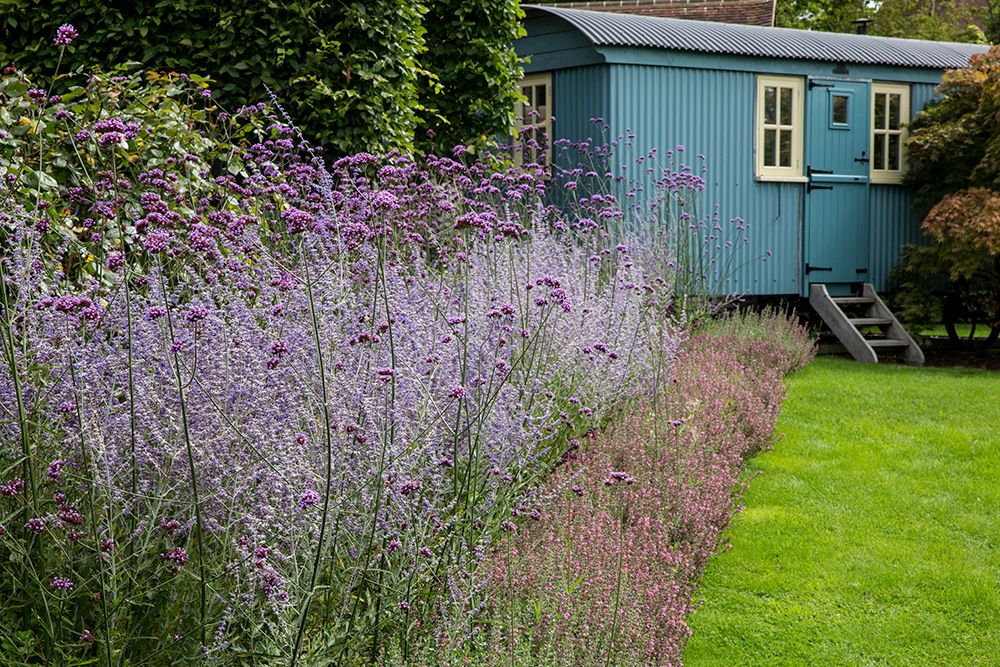
A rain garden doesn't need to look like a collection of random moisture-loving plants.
Design it the same way you would any attractive landscape bed.
Consider combining:
Ornamental Grasses and Grass-Like Plants
These can provide movement, texture, and structure.
Their upright forms can also contrast beautifully with broad-leaved perennials.
Flowering Perennials
Choose plants with different bloom periods to extend seasonal color.
Rather than relying on one spectacular flowering moment, aim for a succession of interest throughout the growing season.
Shrubs
Where space allows, shrubs can give the rain garden structure and help it look intentional even when perennials aren't blooming.
Ground-Level Plants
Lower-growing plants can help fill gaps and soften the edges of the garden.
The goal is to create layers rather than a flat bed of plants all growing to the same height.
Think Beyond Flowers
One of the most common landscape-design mistakes is choosing plants based entirely on blooms.
Flowers are temporary.
A successful rain garden should still look interesting when nothing is flowering.
Consider:
- Foliage color
- Leaf shape
- Plant texture
- Mature height
- Seed heads
- Bark
- Branching structure
- Fall color
- Winter form
A combination of fine grasses, bold foliage, upright plants, spreading forms, and structural shrubs can make the garden visually interesting throughout much more of the year.
Should You Use Native Plants?
Native plants can be a strong option for rain gardens when they're appropriate for the site's conditions.
They may support local pollinators and wildlife while helping create a landscape connected to the surrounding region.
But "native" doesn't automatically mean "plant anywhere."
Some native species prefer dry soil. Others naturally grow in wet environments. Some need full sun, while others prefer shade.
Choose plants based on site compatibility first.
If you're interested in a native-focused rain garden, look for resources specific to your state, county, university extension service, or regional native-plant organizations.
Can You Add Rocks to a Rain Garden?
Absolutely.
Stone can be both functional and decorative when used thoughtfully.
A rain garden might include:
- River rock
- Gravel
- Boulders
- Stone edging
- A dry creek bed
- Rock-lined water entry points
For example, if water enters the garden from a downspout extension, strategically placed stone can visually connect the water source to the planting area.
A dry creek bed can also turn the movement of water into part of the landscape design.
Just don't let stone overwhelm the planting.
Plants are what transform a drainage feature into a garden.
Rain Garden + Dry Creek Bed: A Beautiful Combination
If you want stormwater management to become a visible design feature, consider combining a rain garden with a dry creek bed.
A dry creek can visually guide water through the landscape toward the rain garden.
When dry, it looks like a decorative stone feature.
During rain, it can become part of the path water follows through the property when appropriately designed.
The combination can work especially well in:
- Sloped yards
- Side yards
- Areas receiving downspout runoff
- Landscapes with naturalistic designs
- Properties where drainage needs to be visually integrated
Add ornamental grasses, shrubs, perennials, and strategically placed boulders around the creek to soften the transition between stone and planting.
Make the Rain Garden Look Intentional
One concern homeowners sometimes have is that a rain garden will look messy.
It doesn't have to.
The difference between a beautiful rain garden and something that looks accidental often comes down to design.
Give It a Defined Edge
A clean border helps visually separate the garden from lawn or surrounding landscape.
Repeat Plants
Instead of planting one of everything, repeat key plants throughout the bed.
Repetition creates rhythm and makes the garden feel planned.
Use Plant Masses
Groups of three, five, seven, or larger drifts can create stronger visual impact than scattered individual plants.
Create Height Layers
Place taller plants where they won't overwhelm shorter ones, while accounting for how the garden will be viewed.
Include Structure
Shrubs, grasses, boulders, and other structural elements help the garden maintain visual interest between bloom periods.
Connect It to the Rest of the Yard
Use plants, materials, or colors found elsewhere in your landscape so the rain garden doesn't feel like a completely separate project.
Can a Rain Garden Be Low Maintenance?
Yes—but low maintenance doesn't mean no maintenance.
Once established, a thoughtfully designed rain garden can be relatively manageable, particularly when plants are well matched to the conditions.
You'll still need to:
- Weed
- Monitor plant health
- Replace unsuccessful plants
- Maintain mulch if used
- Remove excessive sediment or debris
- Check water entry and overflow areas
- Divide or prune plants when necessary
- Watch for erosion
The first growing season often requires more attention while plants establish.
Good design up front can reduce future work considerably.
What Are Common Rain Garden Mistakes?
Rain gardens are simple in concept, but a few mistakes can cause problems.
Mistake 1: Putting It Too Close to the House
Managing water should not involve intentionally directing it toward your foundation.
Mistake 2: Assuming Every Wet Spot Is a Good Location
Persistent standing water may indicate a larger drainage issue rather than an ideal rain-garden site.
Mistake 3: Choosing Plants Only Because They "Like Water"
Rain-garden plants often need to tolerate both wet and dry periods.
A plant suited to permanently saturated soil may not thrive once the basin dries between storms.
Mistake 4: Ignoring Mature Plant Size
That cute little shrub at the nursery may become much larger.
Plan for mature dimensions rather than planting everything based on its size at purchase.
Mistake 5: Using Too Many Different Plants
Variety is good.
Chaos isn't.
Repeating groups of selected plants usually creates a more cohesive landscape.
Mistake 6: Forgetting About Overflow
What happens during an unusually heavy storm when the rain garden fills?
Safe overflow needs to be considered as part of the design.
Water shouldn't simply be redirected toward the house, neighboring property, or another vulnerable area.
What If Your Yard Has Heavy Clay Soil?
Clay doesn't automatically rule out a rain garden, but it can complicate the project.
Because water may infiltrate slowly, the garden's size, soil preparation, depth, and drainage strategy become particularly important.
Avoid assuming that adding a layer of "good soil" on top will solve every drainage issue.
Water movement depends on the entire soil profile.
For difficult sites, a landscape professional can help determine whether a rain garden is appropriate or whether another drainage strategy would work better.
What If You Have a Small Yard?
You don't necessarily need a huge property.
A smaller rain garden designed to receive runoff from one downspout or limited hardscape area may still become an attractive landscape feature.
In a compact yard, pay particular attention to:
- Mature plant size
- Proximity to structures
- Overflow
- Access
- Scale
Choose plants that won't quickly overwhelm the available space.
A small garden can still incorporate layers, seasonal color, grasses, and stone.
Rain Gardens Can Be Beautiful Even When It's Not Raining
The best rain gardens don't advertise themselves as stormwater infrastructure.
They simply look like great landscapes.
Imagine a shallow garden filled with ornamental grasses moving in the wind, flowering perennials attracting pollinators, a few carefully positioned shrubs providing structure, and natural stone creating a visual path through the planting.
When rain arrives, the garden takes on another job.
That's the beauty of designing landscapes around natural processes.
You don't necessarily have to choose between function and appearance.
The best landscapes can provide both.
Turn a Drainage Problem Into a Landscape Opportunity
That soggy corner of the yard may be frustrating, but it can also reveal something useful about your property.
It's showing you how water moves.
Instead of fighting those natural patterns, thoughtful landscape design can sometimes work with them.
A rain garden can transform stormwater runoff into an opportunity to introduce new plants, reduce difficult lawn areas, support wildlife, add seasonal interest, and create a landscape feature that's both functional and attractive.
The key is planning around the actual site.
Observe the water. Understand the soil. Choose an appropriate location. Select plants suited to your climate and moisture conditions. Then design the garden as part of the overall landscape—not simply as a place for excess water to go.
Ready to Reimagine Your Landscape?
Whether you're trying to make better use of a soggy area, create a more water-wise yard, reduce lawn, incorporate native plants, or simply build a landscape with more purpose, ShrubHub can help you turn ideas into a cohesive outdoor design.
With professional online landscape design, you can explore planting layouts, hardscape features, garden beds, outdoor living spaces, and creative solutions tailored to your property and style.
Ready to see what's possible in your yard? Start your landscape design with ShrubHub and turn challenging spaces into opportunities.