


How to Design a Low-Maintenance Landscape: 12 Ideas That Save Time, Water & Work
Published: 04/09/2026 | Updated: 04/09/2026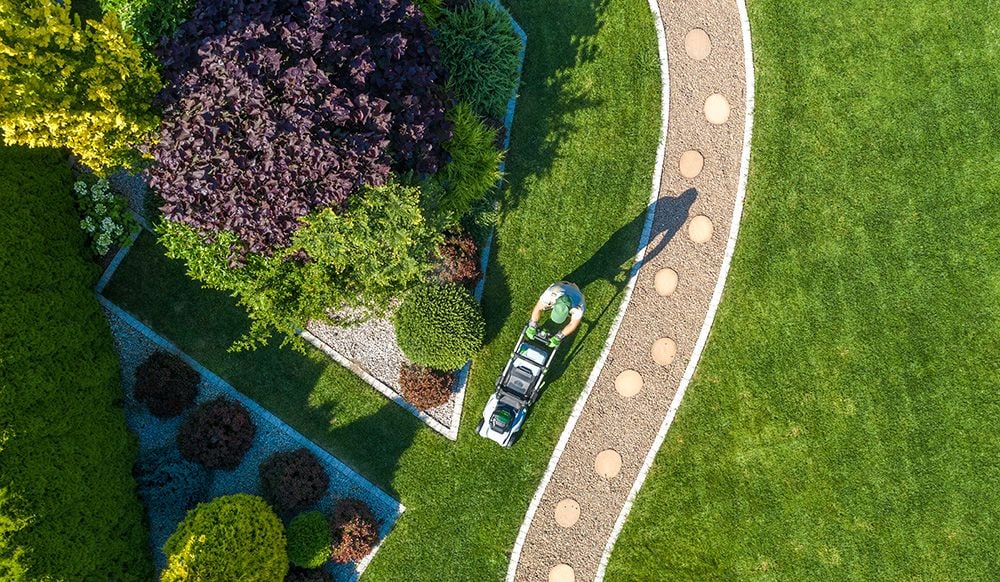
A beautiful landscape shouldn't require every free weekend you have.


If your Saturday mornings routinely disappear into mowing, trimming, weeding, watering and trying to keep overgrown plants under control, the problem may not be that you're bad at yard maintenance.
The landscape itself may simply require too much maintenance.
Truly low-maintenance landscaping isn't about filling your yard with a handful of supposedly indestructible plants and hoping for the best. It's about designing the entire outdoor space so the plants, lawn, irrigation, hardscape and layout work together.
The right plan can reduce repetitive maintenance while still creating a yard that feels lush, intentional and beautifully designed.
Whether you're planning a new landscape or trying to simplify the one you already have, these 12 low-maintenance landscaping ideas can help you spend less time working on your yard—and more time enjoying it.
1. Design the Entire Landscape Before You Start Buying Plants
One of the easiest ways to create a high-maintenance yard is to landscape it one purchase at a time.
You see a beautiful shrub at the garden center.
You find an empty spot.
You plant it.
A few months later, another plant catches your eye and goes into the next available space.
Eventually, you have a collection of individual plants rather than a cohesive landscape.
The problem often becomes obvious several years later. Plants begin competing for space. Some require considerably more water than their neighbors. Others outgrow walkways or block windows. Certain areas become difficult to mow or maintain.
Low-maintenance landscaping starts with a complete plan.
Think about mature plant sizes, pathways, irrigation, sun exposure, drainage, outdoor living areas, views and how you'll actually move through and maintain the property.
Planning first can prevent years of unnecessary work later.
2. Choose Plants Based on Their Mature Size
That three-gallon shrub sitting at the nursery looks perfectly proportioned beside your front walkway.
But how big will it be in five years?
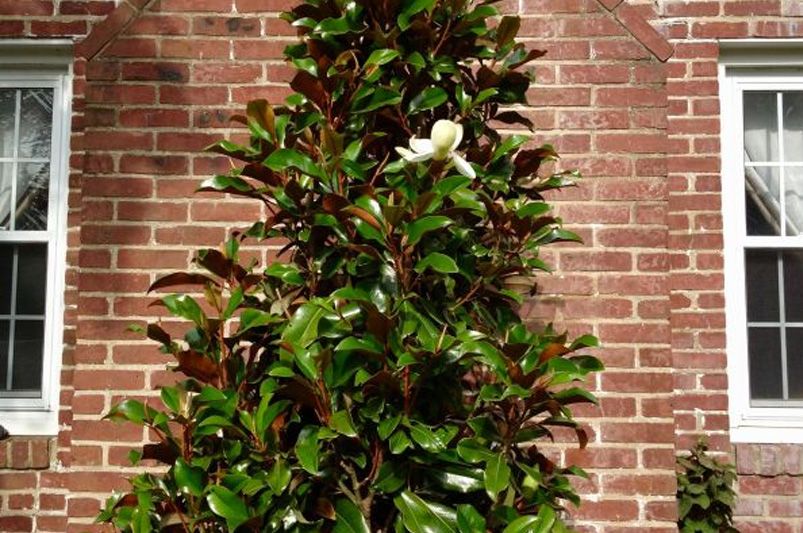
One of the most common landscaping mistakes is designing around the size of plants when they're purchased instead of their mature dimensions.
Plants that are too large for their location require repeated pruning just to keep them within bounds.
A shrub naturally capable of growing eight feet wide shouldn't be planted in a three-foot space unless you're prepared to continually maintain it.
Instead, choose plants whose mature height and spread naturally fit the area.
You'll reduce pruning and create a landscape that looks increasingly established as it matures rather than increasingly overcrowded.
Sometimes the lowest-maintenance landscape isn't about choosing a particular species.
It's simply about putting the right-sized plant in the right-sized space.
3. Reduce Lawn Where It Doesn't Serve a Purpose
A healthy lawn can be beautiful, functional and an important part of a landscape.
But that doesn't mean every available square foot needs to be grass.
Lawns can require mowing, edging, watering, fertilizing and seasonal maintenance. Awkward strips of grass can be particularly frustrating.
Think about the lawn areas you actually use.
Grass may make perfect sense for children's play areas, recreation, pets or open gathering spaces.
But what about the narrow strip beside the driveway?
The difficult slope?
The patch beneath a tree that never grows well?
Or the isolated corner you mow every week but never actually use?
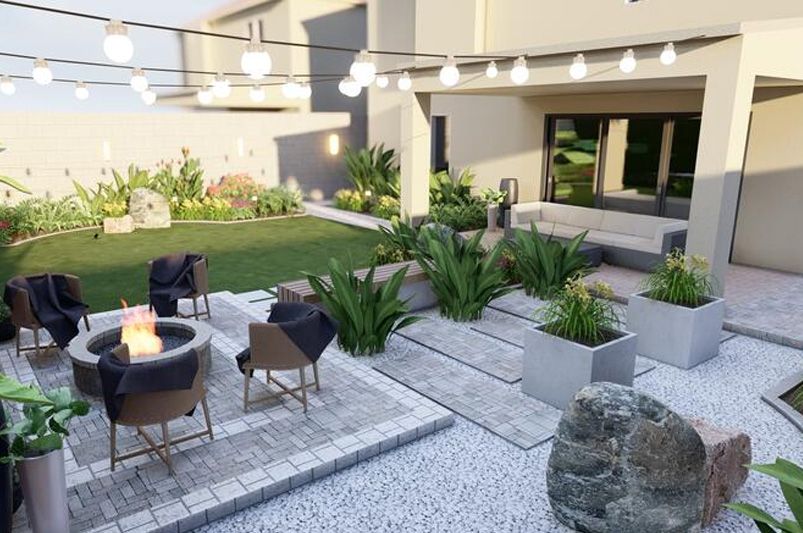
Consider replacing unnecessary lawn with appropriately designed planting beds, groundcovers, pathways, patios or other landscape elements.
The goal isn't necessarily a grass-free yard.
It's an intentional lawn.
Keep it where it contributes something.
4. Group Plants With Similar Water Needs
Imagine placing a moisture-loving plant directly beside one that prefers relatively dry soil.
Which one should you water for?
That's exactly the kind of conflict smart landscape planning can avoid.
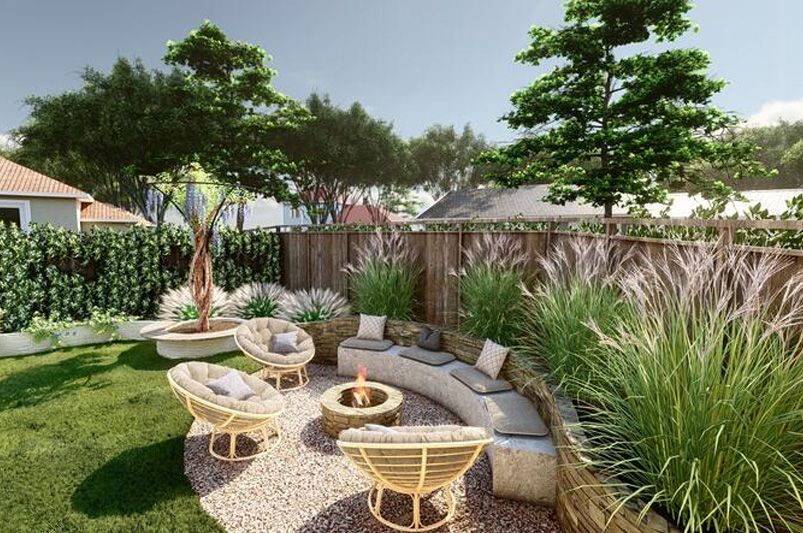
Grouping plants according to similar water requirements—sometimes called hydrozoning—allows irrigation to be managed more efficiently.
Plants requiring more consistent moisture can occupy one zone, while drought-tolerant plants can be grouped elsewhere.
This approach can simplify watering and reduce the likelihood of overwatering some plants just to satisfy others.
It can also make future irrigation adjustments much easier because each area of the landscape has been designed around similar needs.
Low maintenance often comes from eliminating conflicts before they happen.
5. Use Native and Climate-Adapted Plants
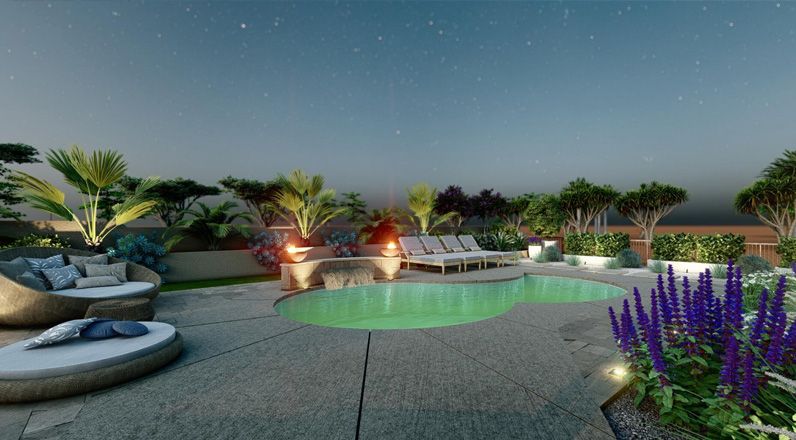
A plant that constantly struggles with your climate will probably require more attention.
It may need additional irrigation, protection from temperature extremes, soil adjustments or repeated intervention just to keep it looking good.
Native plants are naturally associated with particular regions and can be excellent choices when site conditions match their needs.
Climate-adapted plants from compatible growing environments can also perform beautifully.
The key is matching the plant to your actual conditions.
Consider:
-
USDA hardiness zone
-
Summer temperatures
-
Winter temperatures
-
Rainfall
-
Humidity
-
Sun exposure
-
Soil
-
Drainage
-
Available space
The easiest plant to maintain is often one that already likes where you've put it.
6. Build Structure With Long-Lived Shrubs and Evergreens
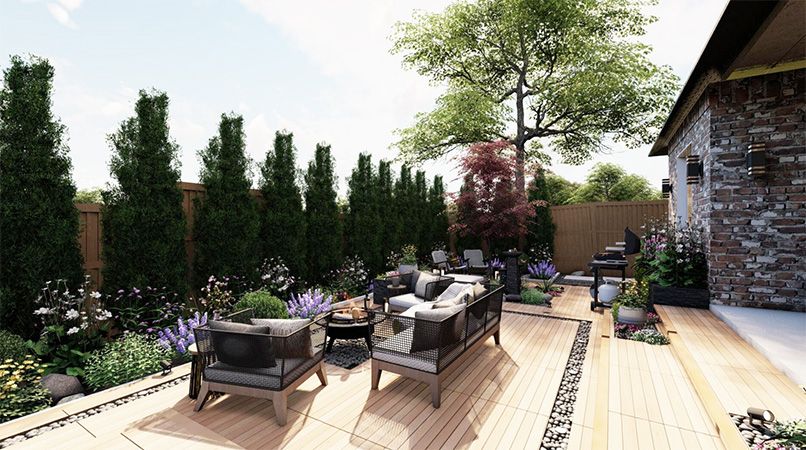
Flowers are wonderful, but a landscape doesn't need to depend entirely on flowers to look beautiful.
One of the secrets to a lower-maintenance design is creating a strong underlying structure.
Trees, shrubs, ornamental grasses and evergreens can establish the major shapes and visual anchors of the landscape.
Once that framework is established, flowering perennials and seasonal color become accents rather than the only things making the yard interesting.
Think of your landscape like decorating a room.
The sofa, tables and architecture create the foundation. Pillows and accessories add personality.
In a landscape, shrubs, trees and structural plants provide that foundation.
A strong framework can keep a yard looking intentional even when nothing spectacular is blooming.
7. Use Perennials Strategically Instead of Replanting Everything
Annual flowers can provide incredible seasonal color, but large beds filled exclusively with annuals need to be replanted repeatedly.
If reducing maintenance is the goal, combine annuals with long-lived perennials, flowering shrubs and ornamental grasses.
Perennials return year after year when they're appropriately matched to the site.
That doesn't mean they require zero care. Some benefit from dividing, cutting back or occasional maintenance.
But a thoughtfully designed perennial planting can provide recurring color without rebuilding the entire garden every season.
Reserve annuals for places where their impact matters most—containers, entryways, small focal areas and strategic pockets of seasonal color.
You'll still get that burst of personality without making your entire yard dependent on constant replanting.
8. Use Mulch to Your Advantage
Mulch may not be the most glamorous part of landscape design, but it performs several useful jobs.
An appropriate layer of mulch can help conserve soil moisture, moderate soil temperatures and suppress some weed growth.
It also visually connects individual plants into a cohesive garden bed.
But more isn't always better.
Avoid piling mulch against tree trunks or burying plant crowns. The goal is to cover appropriate exposed soil—not build mulch volcanoes around your plants.
Organic mulch will also decompose over time and may need replenishing.
Even so, a well-mulched planting bed can be considerably easier to manage than exposed soil constantly producing weeds and losing moisture.
9. Simplify the Shapes of Your Beds and Lawn
Landscape geometry has a surprisingly large effect on maintenance.
Imagine mowing around twelve tiny planting islands scattered throughout a lawn.
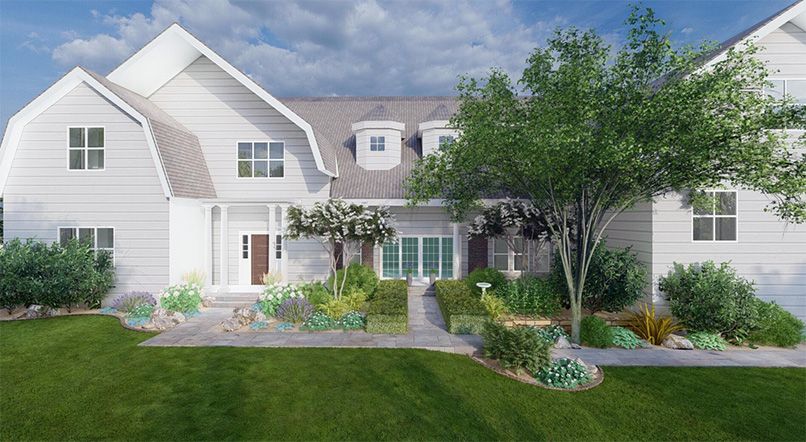
Now imagine mowing around one large, gently curved planting bed.
Which sounds easier?
Complicated bed shapes, tight corners and tiny strips of lawn can create unnecessary edging, mowing and trimming.
A professionally designed landscape can still have beautiful curves and visual interest without creating maintenance obstacles everywhere.
Look for opportunities to combine disconnected planting areas.
Create generous beds rather than numerous tiny ones.
Use clean transitions between lawn and landscape areas.
And consider whether the mower can easily navigate the shapes you're creating.
Good design doesn't just look good from the street.
It should also make sense when someone has to maintain it.
10. Design Irrigation Around the Landscape
Dragging hoses around the yard isn't most people's idea of a relaxing evening.
A low-maintenance landscape should consider irrigation from the beginning rather than treating watering as an afterthought.
Different areas may benefit from different irrigation approaches depending on the plants, climate and site.
Efficient irrigation also works hand-in-hand with plant selection.
Drought-tolerant landscaping doesn't mean plants never need water. Even drought-tolerant plants generally require appropriate watering while becoming established.
The objective is to create a landscape where irrigation matches actual plant requirements.
Smart plant selection plus smart water delivery can reduce both waste and work.
11. Don't Overcrowd Plants for an Instant-Finished Look
It's tempting.
Your new garden bed looks sparse, so you add a few more plants.
And then a few more.
Suddenly it looks fantastic.
For about a year.
Then everything grows.
Overplanting can eventually lead to crowded plants, poor air circulation, increased pruning and a landscape that constantly needs to be cut back.
A professionally planned landscape considers what plants will look like after they mature, not just immediately after installation.
New landscapes sometimes need a little patience.
Temporary open space isn't necessarily a design failure. It may be exactly the space your plants will need as they reach maturity.
Design for the landscape you're going to have—not just the one you're installing today.
12. Design for Four-Season Interest
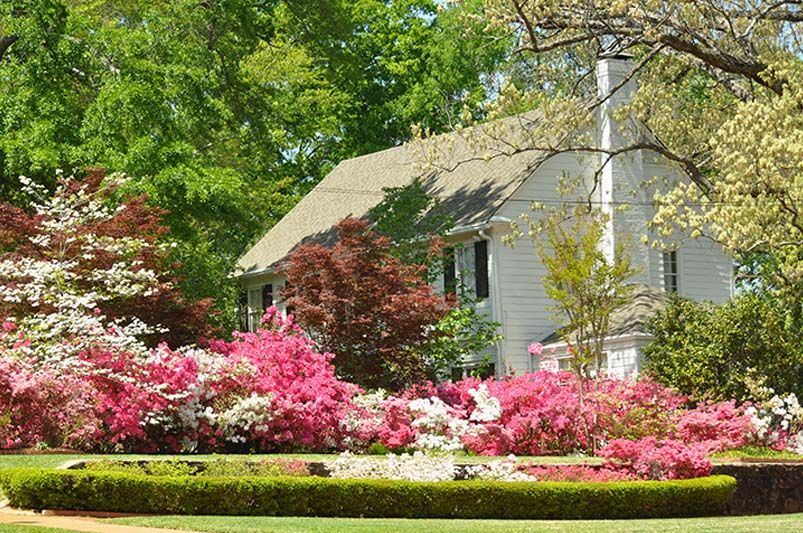
A low-maintenance landscape shouldn't require a complete redesign every season to remain attractive.
Instead, build interest into the landscape throughout the year.
That might include:
Spring: flowering trees, shrubs, bulbs and early perennials.
Summer: flowering perennials, ornamental grasses and strong foliage combinations.
Fall: foliage color, berries, grasses and late-season flowers.
Winter: evergreens, ornamental bark, branching structure, seed heads and hardscape.
The exact combination depends on your climate, but the principle works almost everywhere.
When different parts of the landscape take turns providing interest, you don't need to rely so heavily on constant seasonal planting to keep the yard looking good.
What Is the Lowest-Maintenance Type of Landscaping?
There's no single landscape style that wins this title for every home.
A desert xeriscape might be extremely low maintenance in Arizona but completely inappropriate in a rainy part of the Pacific Northwest.
Likewise, a lush shade garden that thrives almost effortlessly in one region might struggle somewhere else.
The lowest-maintenance landscape is generally one designed around its location.
It uses plants suited to the climate.
It respects available sunlight.
It accounts for soil and drainage.
It puts plants where they have enough room to mature.
And it uses hardscape, lawn and planting areas in proportions that make sense for the people living there.
That's why copying a beautiful landscape from a photograph doesn't always produce the same results.
Your yard has its own conditions.
Can a Low-Maintenance Yard Still Look Professionally Landscaped?
Absolutely.
In fact, some of the most sophisticated landscapes use relatively simple plant palettes and strong design principles.
Low maintenance doesn't have to mean a yard filled with gravel and three lonely shrubs.
You can still have:
-
Layers of plants
-
Seasonal flowers
-
Beautiful trees
-
Outdoor entertaining spaces
-
Privacy
-
Curb appeal
-
Texture and movement
-
Pathways
-
Lighting
-
Water-wise planting
-
Year-round color
The difference is that every element has a reason for being there.
Repeating plants rather than using dozens of unrelated varieties can create visual cohesion.
Allowing plants enough room to mature creates beautiful natural forms.
Grouping plants by their needs makes the landscape easier to manage.
Low-maintenance design is really about intentional design.
How Do You Make an Existing Yard Lower Maintenance?
You don't necessarily have to start over.
Walk through your yard and identify where you're spending the most time.
Are you constantly pruning one oversized hedge?
Struggling to keep grass alive beneath a shade tree?
Watering containers every day?
Pulling weeds from an unused side yard?
Mowing awkward strips of lawn?
Those maintenance frustrations are clues.
Instead of repeatedly solving the same problem, consider redesigning that particular area.
Replace a struggling plant with one better suited to the conditions.
Enlarge a planting bed to eliminate an awkward patch of lawn.
Consolidate thirsty plants into one irrigation zone.
Replace plants that have dramatically outgrown their location.
A lower-maintenance yard can evolve one problem area at a time.
The Biggest Low-Maintenance Landscaping Mistake: Choosing Plants Before Creating the Plan
It's easy to get excited about plants.
But plants should be one part of a larger landscape plan.
Before deciding what to buy, determine:
Where are the pathways?
Where do people gather?
Which views should be highlighted—or screened?
Where does water naturally travel?
Which areas receive full sun or shade?
How much lawn is actually useful?
Where is privacy needed?
How much maintenance are you realistically willing to do?
Once those questions are answered, plant selection becomes much easier.
Instead of asking:
“Where can I put this plant?”
You begin asking:
“What plant belongs in this part of my design?”
That small shift can make an enormous difference.
A Low-Maintenance Yard Starts With a Smart Plan
The best low-maintenance landscapes aren't necessarily the ones with the fewest plants.
They're the ones where everything works together.
Plants fit their spaces.
Water needs are coordinated.
Lawn has a purpose.
Hardscape improves how the yard functions.
Seasonal interest is planned instead of improvised.
And the landscape is designed around both the property and the people who will actually live with it.
That's where professional landscape planning can save far more than time.
It can help prevent expensive plant replacements, unnecessary irrigation, overcrowding and the frustrating cycle of repeatedly redesigning areas that never quite work.
See Your Low-Maintenance Landscape Before You Build It With ShrubHub
You don't have to figure out your entire yard one plant at a time.
With ShrubHub's professional online 3D landscape design service, you can see how your outdoor space could come together before you start buying plants and materials.
Your custom landscape plan can account for your property's layout, regional growing conditions, style preferences and the way you want to use your outdoor space—helping you create a yard that's beautiful and practical to maintain.
Instead of spending money first and figuring out the design later, start with the plan.
Start your custom 3D landscape design with ShrubHub and create an outdoor space designed to look beautiful without taking over your weekends.